 Resin MSLA~$319
Elegoo · released 2024
Elegoo Saturn 4
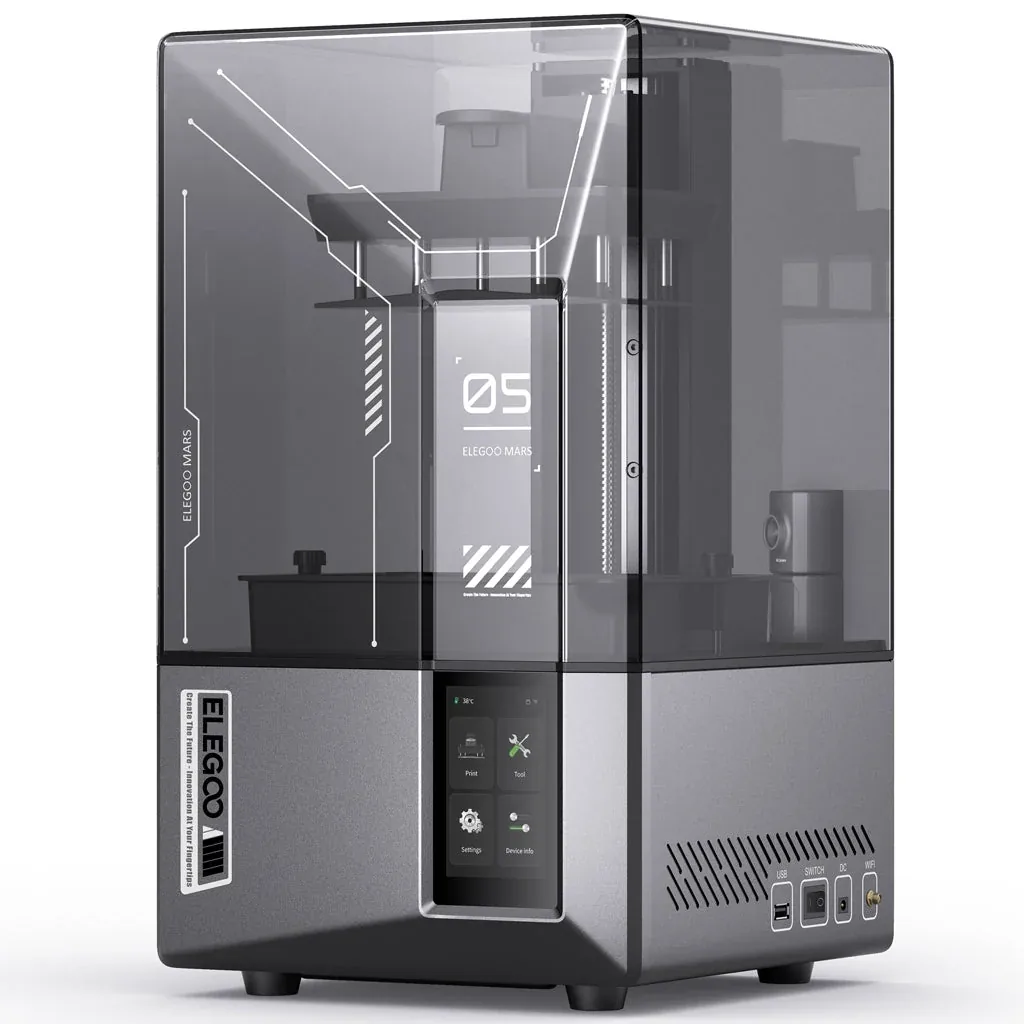
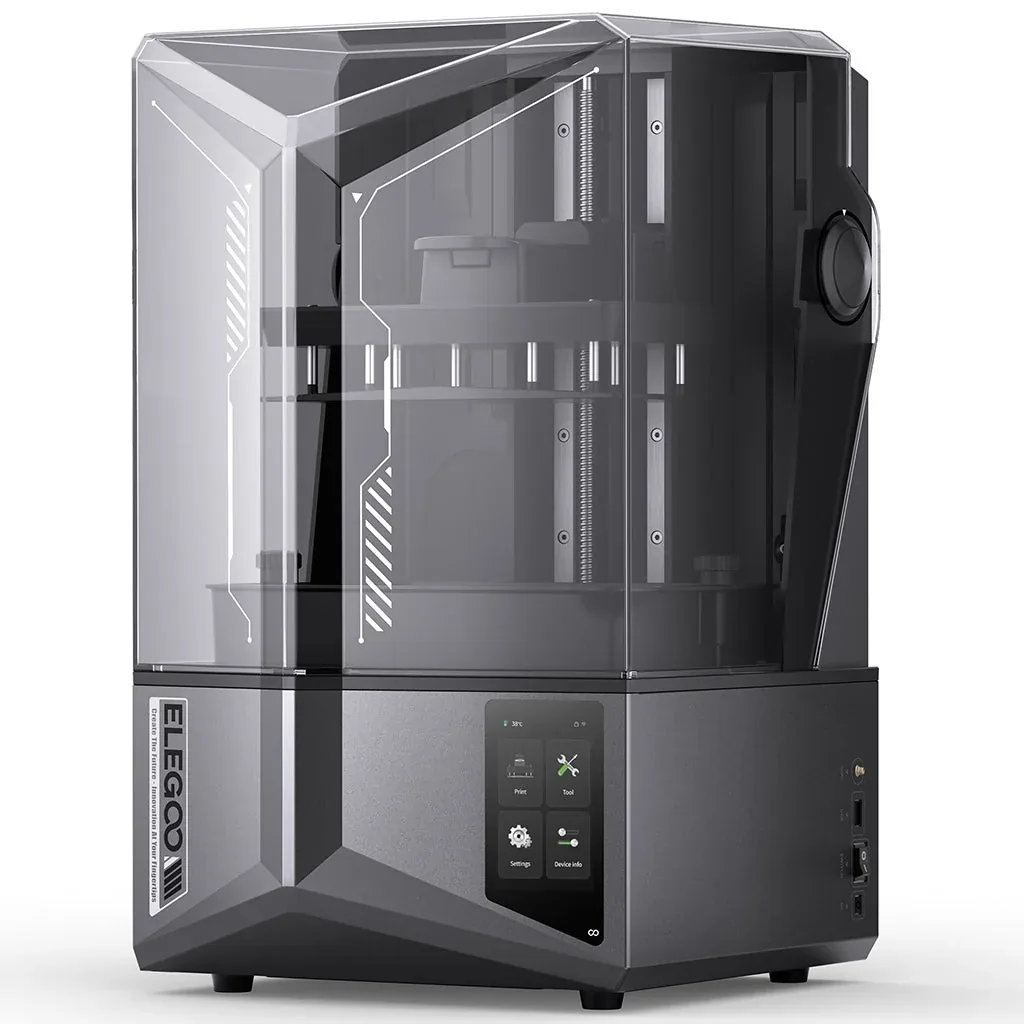
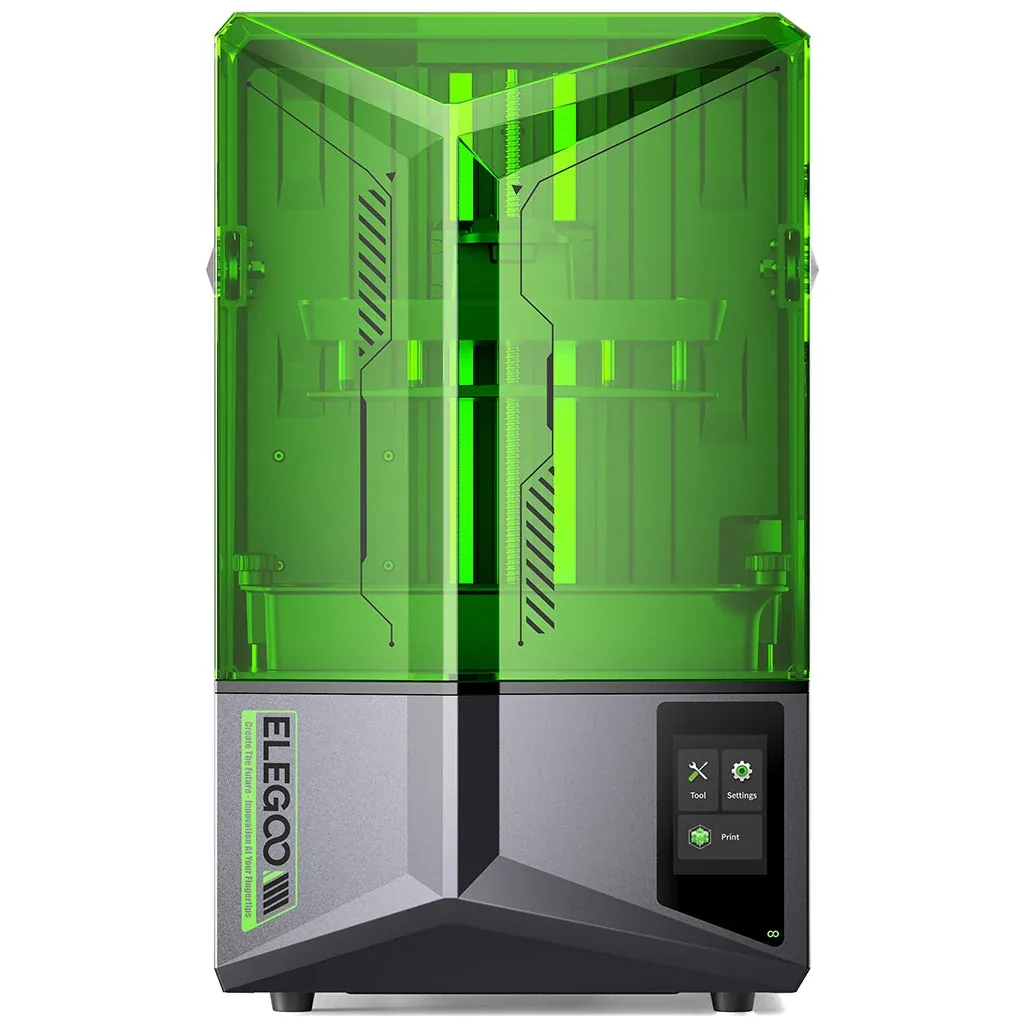
Where the Mars machines are for one figure at a time, the Saturn 4's 219 × 123 mm plate is for a dozen — the difference between printing an army over a weekend and printing it over a month. A 10-inch 12K panel gives a 19 µm pixel, close enough to the Mars 5 Ultra's 18 µm that detail is effectively equivalent; the money buys area, not resolution. Note that the pixels are not square on this panel: 19 µm across X and 24 µm along Y, which is why a single 'XY resolution' figure can mislead and why the narrower number is the one quoted. This is the standard Saturn 4 rather than the Ultra, so it has neither the tilt-release mechanism nor the heated vat, and a full plate takes noticeably longer to lift layer by layer.
- Approx. price
- ~$319
- Build volume
- 5.9 L
- Per litre
- $54
- XY pixel
- 19 µm
Best forBatch printing miniatures or large single models where plate area is the constraint.
Specifications
- Build volume
- 218.88 × 122.88 × 220 mm
- Volume
- 5.9 L
- Motion
- gantry
Optics and handling
- LCD resolution
- 11520 × 5120 px
- LCD size
- 10 in
- XY resolution
- 19 µm
- Layer height
- from 10 µm
- Release film
- FEP
- Vat capacity
- 800 ml
- Multi-material
- None offered
- Firmware
- proprietary
- Cloud
- Optional
- Camera
- No
- Assembly
- Pre-assembled
- Weight
- 10 kg
- Footprint
- 290 × 290 × 480 mm
Features
- 10-inch 12K mono LCD, 11520 × 5120 pixels
- 218.88 × 122.88 mm plate — roughly three times the Mars area
- 19 µm pixel pitch across X (24 µm along Y)
- 800 ml vat for long batch runs
- 220 mm of Z height
What it does well
- Roughly three times the print area of the Mars machines at a modest price step
- 19 µm pitch is effectively as detailed as the Mars 5 Ultra, so area comes without a detail penalty
- Large 800 ml vat means fewer top-ups mid-batch
- 220 mm Z accommodates tall models without sectioning
Where it gives ground
- No tilt-release mechanism, so peel forces on a full plate are high and layers are slow
- FEP rather than ACF film — more peel force and shorter film life
- Non-square pixels: 19 µm across but 24 µm along Y, so detail is direction-dependent
- No camera and no heated vat at this price
- A 219 × 123 mm plate of resin is a lot of expensive liquid to have in one vat
The points above are read off published specifications, not from owner reports.
What owners report
Drawn from owner discussions in 3D-printing communities, not from our own testing — this site has no test lab.
What owners like
- Owners who bought it and printed with it report being genuinely pleasantly surprised, which is a common framing in threads about it
- The large plate is the reason to choose it over a Mars-class machine, and it costs little more
- The 12K panel gives effectively the same visible detail as much more expensive machines at 19 µm
- Cheap enough that it is a sensible first large resin printer rather than a considered second one
Common complaints
- Without tilt release, peel forces on a full plate are high — layers are slower and prints are more likely to detach from supports than on the Ultra
- Standard release film rather than the gentler ACF used further up the range, which means more peel force and shorter film life
- Pixels are not square — 19 µm across but 24 µm along the other axis — so detail is direction-dependent
- A plate this size holds a great deal of expensive resin, making a failed print costly
The Saturn 4 is the entry point to large-plate resin printing, and owner reaction to it skews positively surprised — threads from people who bought one and then actually printed with it tend to report it being better than expected for the money. The 12K panel gives a 19 µm pixel, which is effectively indistinguishable in practice from machines costing considerably more, so what you are paying less for is mechanism rather than resolution.
That mechanism is the honest difference against the Ultra. Without tilt release, each layer is pulled straight off the film rather than peeled from one edge, which means much higher force. The consequences are slower layers on a full plate and a greater chance of a print letting go of its supports partway through. The standard release film compounds it, since it peels harder and wears out sooner than the ACF film used further up the range.
It makes most sense for someone who wants the plate area and can accept longer prints for it. If you intend to fill that plate regularly, the Ultra's tilt release and heated vat are what the extra money buys.
Questions owners ask
+Saturn 4 or Saturn 4 Ultra?
Identical panel, identical plate, identical 19 µm pixel. The Ultra adds tilt release, which dramatically reduces peel force and speeds up full-plate prints, plus a heated vat and ACF film. If you print full plates regularly, the Ultra pays for itself in time and failed prints. If you print occasionally, this is the same detail for less.
+Why are my prints slow on a full plate?
Without tilt release, every layer is pulled straight off the film, and the force required scales with how much of the layer is in contact. A full plate therefore lifts much more slowly than a sparse one. This is inherent to the mechanism rather than a setting you can tune.
+What does 19 × 24 µm mean?
The pixels are not square: 19 µm across the plate's width and 24 µm along its depth. Detail is therefore slightly better resolved in one direction than the other. It is why a single 'XY resolution' number can mislead, and why the narrower figure is the one usually quoted.
+Is it a good first resin printer?
It is a good first large one. For a first resin printer generally, the smaller Mars-class machines cost less and waste less resin while you are learning exposure settings — and learning on a plate that holds this much resin makes early mistakes expensive.