 FDM CoreXY~$249
Flashforge · released 2023
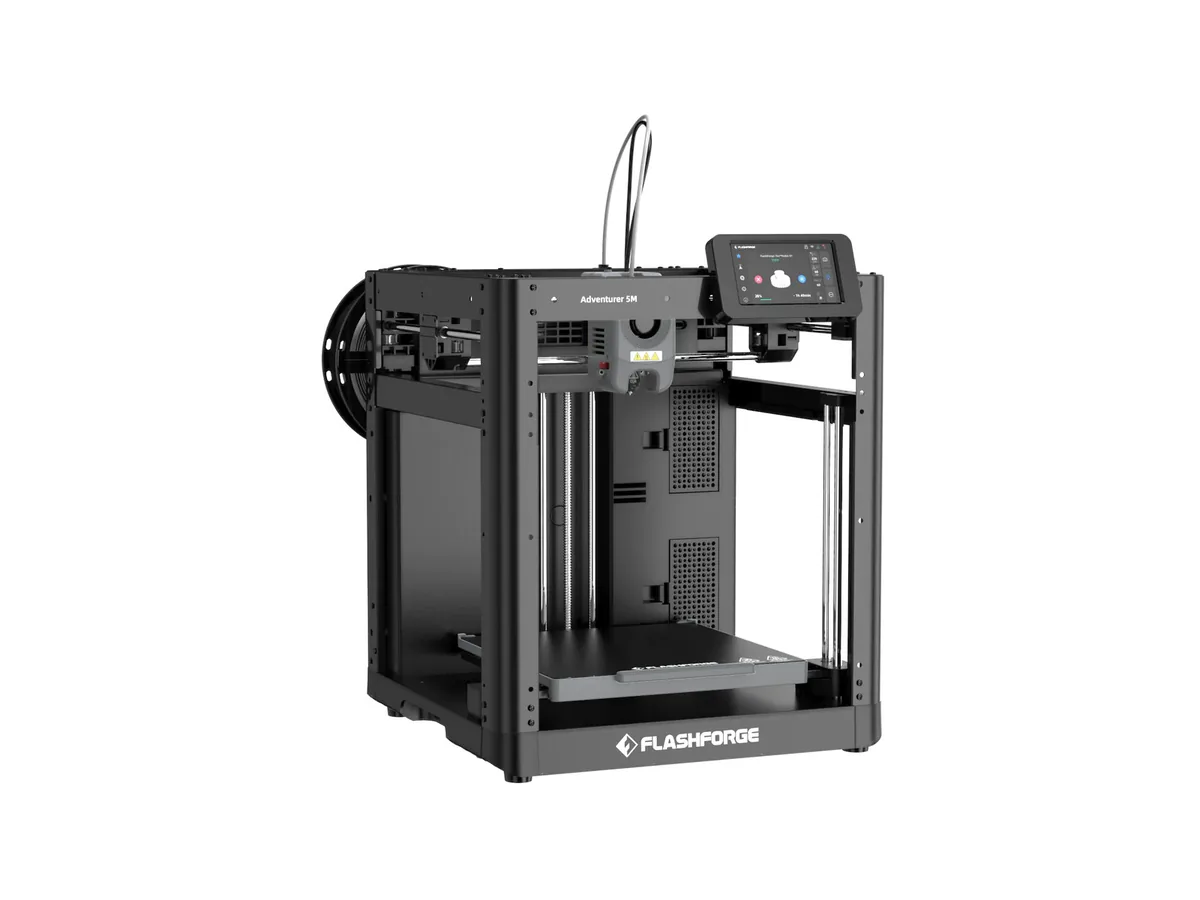
Flashforge Adventurer 5M
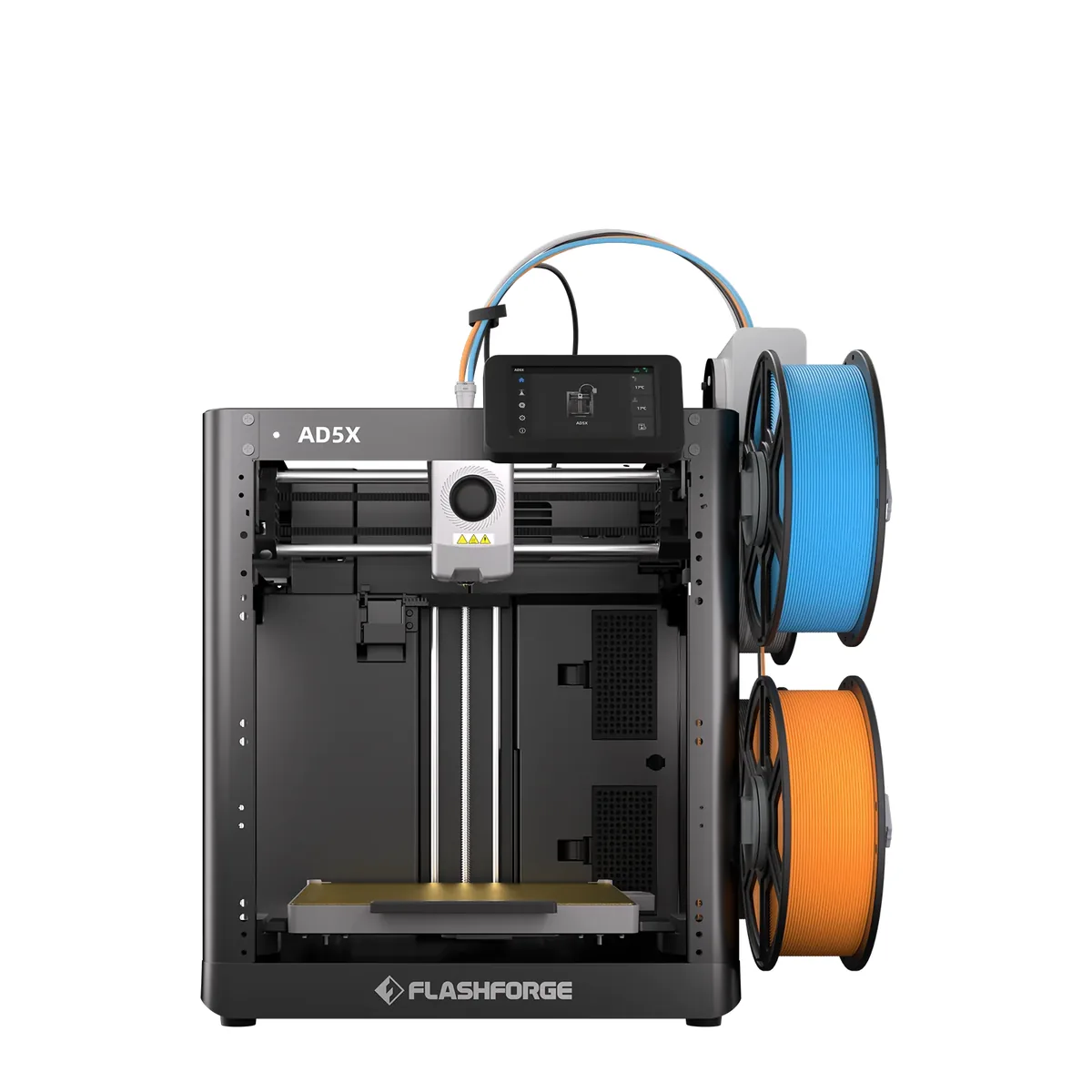
One of the cheapest open-frame CoreXY machines available, and one of the few in its price class that publishes a flow rate: 32 mm³/s, which works out to about 400 mm/s of genuine line speed and makes the 600 mm/s headline only moderately optimistic. CoreXY at $249 is the real story, because it means the toolhead moves and the bed only drops — the geometry that every fast printer above $400 uses. The nozzle detaches in about three seconds without tools, which is a small convenience that becomes a large one the third time you clear a jam. The ceiling is the 280 °C hotend, near the bottom of this catalogue, which closes off nylon and polycarbonate entirely and makes higher-temperature PETG marginal. No camera and no multi-material path; the AD5X is Flashforge's answer to the latter.
- Approx. price
- ~$249
- Build volume
- 10.6 L
- Per litre
- $23
- True multi-material price
- No changer offered
Real speed ceiling
400 mm/s
32 mm³/s ÷ (0.4 mm × 0.2 mm) = 400 mm/s. The Adventurer 5M is advertised at 600 mm/s, so the hotend can feed 67% of the headline figure. An estimate for a straight line at the hotend’s rated flow — real prints are slower again.
Best forA cheap fast printer where the CoreXY geometry matters more than material range.
Specifications
- Build volume
- 220 × 220 × 220 mm
- Volume
- 10.6 L
- Motion
- CoreXY
- Max speed
- 600 mm/s
- Acceleration
- 20,000 mm/s²
- Max flow
- 32 mm³/s
- Hotend max temp
- 280 °C
- Bed max temp
- 110 °C
- Enclosure
- Open frame
- Extruder
- direct drive
- Auto level
- probe
Materials, control and build
- Multi-material
- None offered
- Firmware
- Klipper
- Cloud
- Optional
- Camera
- No
- Assembly
- Pre-assembled
- Weight
- 10.6 kg
- Footprint
- 363 × 376 × 413 mm
Features
- CoreXY motion at an entry-level price
- Published 32 mm³/s flow rate
- Three-second tool-free detachable nozzle
What it does well
- CoreXY at $249 — the geometry that makes speed real, at bed-slinger money
- Publishes a 32 mm³/s flow rate, unusual at any price and almost unheard of at this one
- Quick-detach nozzle turns clearing a jam into a two-minute job
- 110 °C bed is hotter than most machines in this bracket
Where it gives ground
- 280 °C hotend is among the coolest here — no nylon, no polycarbonate, marginal on hot PETG
- Open frame, so ABS and ASA are out despite the CoreXY speed
- No camera and no multi-material option
- 220 mm cube is small, and the nozzle is not hardened
The points above are read off published specifications, not from owner reports.
What owners report
Drawn from owner discussions in 3D-printing communities, not from our own testing — this site has no test lab.
What owners like
- CoreXY geometry at this price is the reason it appears on shortlists against bed-slingers costing the same
- Owners cross-shopping it against an entry-level Bambu as a second printer take it seriously rather than dismissing it
- The quick-detach nozzle is a genuine convenience that owners notice the first time they clear a jam
- Publishes a flow rate, which almost nothing else at this price does
Common complaints
- Stringing is the dominant, defining complaint — owners describe it as insane, occurring with every filament including brand-new material dried for 24 hours, and surviving retraction and temperature towers
- The stringing clusters at seams, which is where it is most visible and hardest to hide
- An odd heat-cycling behaviour is reported across this machine and its siblings, where it heats to print temperature, drops to around 140 °C, then reheats without being asked
- Bottom-layer artefacts near part edges appear as an unexplained complaint
- The 280 °C hotend is the lowest in this catalogue, closing off nylon and polycarbonate entirely
The Adventurer 5M's appeal is straightforward: CoreXY motion and a published 32 mm³/s flow rate at a price where competitors are bed-slingers that publish nothing. On paper it is one of the better-value machines here.
Owner discussion is dominated by a single problem to a degree that is unusual even in these communities: stringing. Not occasional wisps, but what owners describe as insane stringing, happening with every filament they try including brand-new material dried for a full day, and persisting through retraction towers and temperature towers. It concentrates at seams, which is exactly where it is most visible. This comes up so consistently that it should be treated as a characteristic of the platform to research before buying rather than a fault to be surprised by.
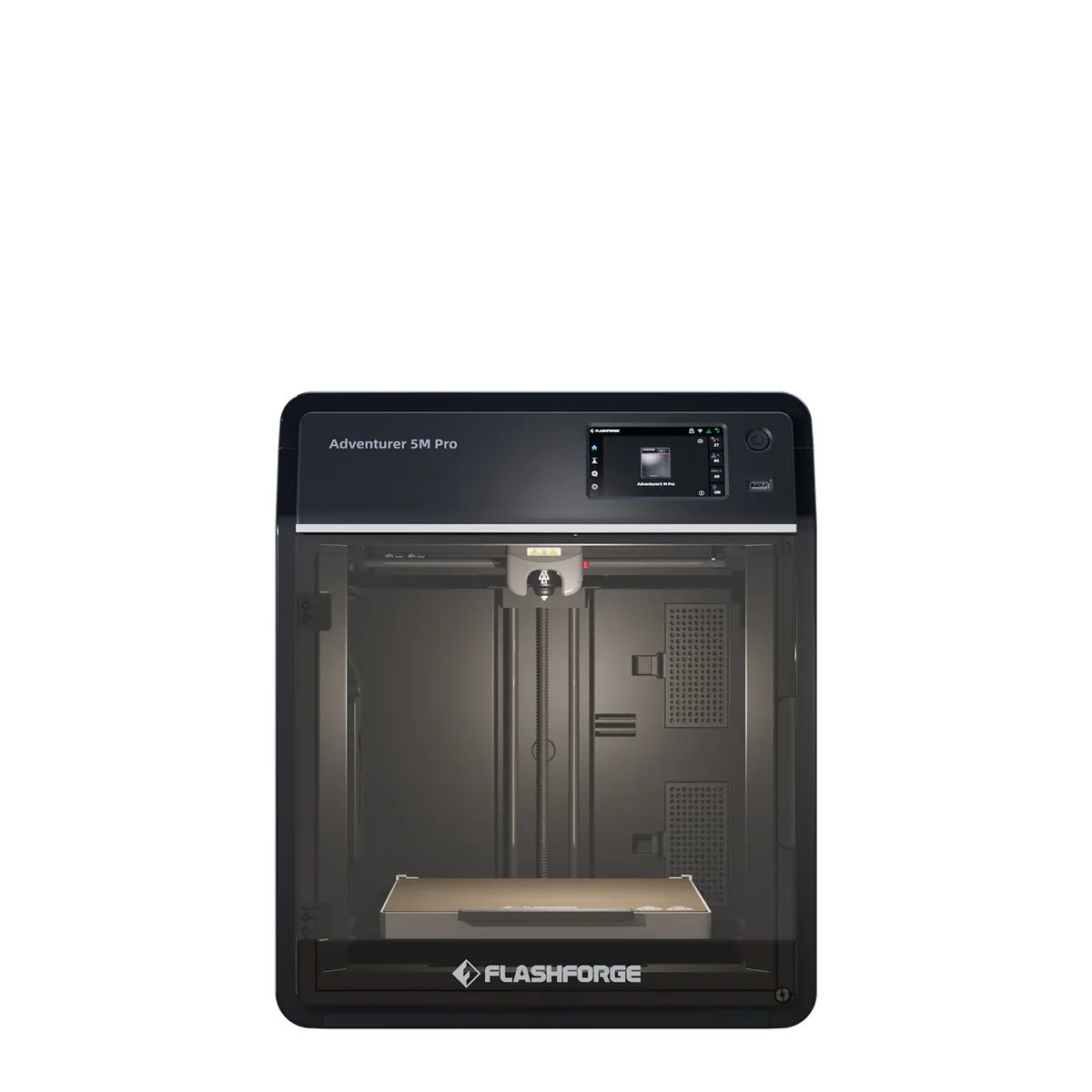
A second, stranger behaviour is reported across the 5M, 5M Pro and AD5X together: the printer heats bed and nozzle to temperature, then drops the nozzle to around 140 °C and reheats, without having been asked. Owners have not settled on an explanation.
Questions owners ask
+Why does my Adventurer 5M string so badly?
This is by far the most reported issue with the machine, and owners describe it surviving the usual fixes — dried filament, retraction towers, temperature towers. Because it is so widely reported across different filaments, treat it as a platform characteristic and research current community settings for this printer specifically rather than assuming your filament is at fault.
+Why does it heat up, cool to 140 °C, then heat again?
Owners across the 5M, 5M Pro and AD5X report this same uncommanded heat-cool-reheat cycle at the start of prints. No settled explanation has emerged in owner discussions. It appears to be a firmware behaviour rather than a fault, and does not seem to prevent printing.
+Adventurer 5M or a Bambu A1 mini?
Owners do cross-shop these at similar money. The Flashforge is CoreXY with a published flow rate and a larger bed; the Bambu is a bed-slinger with better failure detection, a quieter reputation and no stringing complaints of this scale. Given how consistently stringing comes up here, that is the deciding factor for most.
+What materials can it handle?
PLA, PETG and TPU comfortably. The 280 °C hotend is the lowest in this catalogue, so nylon and polycarbonate are out, and the open frame rules out ABS and ASA at any useful size.