Prusa · released 2020
Original Prusa MINI+
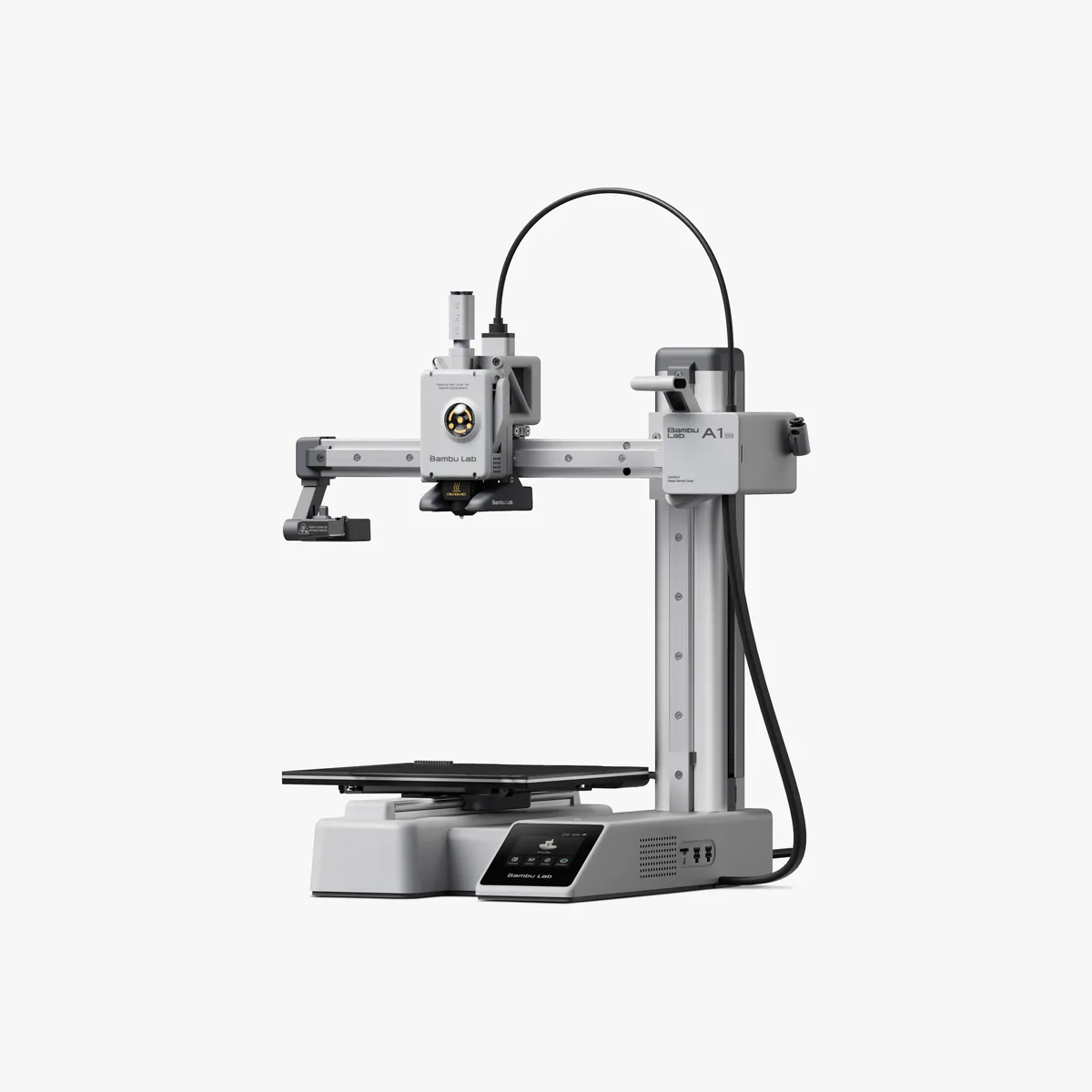
Oldest machine in this catalogue by some margin, and the one that shows most clearly how much the category has moved: a 180 mm cube, 200 mm/s, no enclosure, no input shaping, and a price that a Bambu A1 now undercuts while offering a build volume twice the size. What keeps the MINI+ in the conversation is the part that does not appear on a spec sheet — Prusa still sells every replaceable part for it, still ships firmware for it, and its documentation is the best in desktop 3D printing. For a school, a library or anyone who values being able to fix a machine in five years over printing fast today, that is a real argument. The SuperPINDA probe levels reliably, the removable spring steel sheets work as well as anything newer, and the semi-assembled kit teaches you what the parts do. Judged purely on throughput per dollar it is thoroughly outclassed.
- Approx. price
- ~$409
- Build volume
- 5.8 L
- Per litre
- $70
- True multi-material price
- No changer offered
Real speed ceiling
Not published
Prusa does not publish a volumetric flow rate for the MINI+, so its 200 mm/s claim cannot be checked against what the hotend can actually melt. We do not estimate one.
Best forA school, makerspace or anyone who values a decade of spare parts over spec-sheet speed.
Specifications
- Build volume
- 180 × 180 × 180 mm
- Volume
- 5.8 L
- Motion
- bedslinger
- Max speed
- 200 mm/s
- Acceleration
- 2,500 mm/s²
- Max flow
- Not published
- Hotend max temp
- 280 °C
- Bed max temp
- 100 °C
- Enclosure
- Open frame
- Extruder
- direct drive
- Auto level
- probe
Materials, control and build
- Multi-material
- None offered
- Firmware
- PrusaFirmware
- Cloud
- Optional
- Camera
- No
- Assembly
- Partly assembled
- Weight
- 5 kg
- Footprint
- 380 × 330 × 400 mm
Features
- 180 mm cube with a removable spring steel print sheet
- SuperPINDA inductive probe for mesh bed levelling
- Semi-assembled kit — the frame and electronics go together in an evening
- Every part individually available as a spare from Prusa
- Open firmware and PrusaSlicer profiles maintained for the platform
What it does well
- Spare parts and firmware support that outlast any other brand in this catalogue
- Documentation and repair guides are genuinely the best in the category
- Semi-assembled kit is a real education in how a printer works, without the risk of a full kit build
- Removable spring steel sheets and a reliable inductive probe have aged well
Where it gives ground
- 200 mm/s and no input shaping — several times slower in practice than anything else here
- 180 mm cube for more money than printers with twice the volume
- No enclosure, no hardened nozzle, no multi-material option at all
- 280 °C hotend and 100 °C bed keep it to PLA, PETG and flexibles
The points above are read off published specifications, not from owner reports.
What owners report
Drawn from owner discussions in 3D-printing communities, not from our own testing — this site has no test lab.
What owners like
- Owners consistently report it needing very little to get working compared with the kit-built machines at similar money, which is the main reason it gets recommended as a first printer despite its age
- Long-term reliability is the recurring theme — owners describe multi-year use with only an initial skew correction and nothing since
- Support experiences on this model are cited positively often enough to be part of why people buy the brand again
- Holds its value: used units in good condition with filament thrown in are treated as genuine bargains rather than distress sales
- Still receiving firmware updates years after release, which owners contrast directly with printers whose makers moved on
Common complaints
- The most-asked question about it is whether it is worth $200 more than a Bambu A1 mini, and the honest answer from owners is that it is not on speed or features — only on longevity and openness
- Slow by current standards, and owners who came from it to a modern machine describe the difference as dramatic
- Being a kit, initial skew and squareness problems appear in owner reports and need correcting before print quality settles
- Replacement part prices come up as a specific complaint, with owners in Europe noting spares cost more than the brand's reputation suggests
- A successor has been rumoured for long enough that some owners are explicitly holding off buying
The MINI+ is the oldest machine in this catalogue and owner discussions treat it accordingly: nobody argues it is fast or feature-rich, and the people who own one argue instead that it still works. Multi-year reports of continuous use with almost no intervention are common, as are stories of the company's support resolving early problems well enough that the owner bought Prusa again.
The question that dominates any thread about it is whether it justifies its price against the Bambu A1 mini, which is cheaper, faster, larger and needs no assembly. Owners who chose the Prusa consistently give the same reasons — open firmware, complete spare-part availability, and firmware updates still arriving years later — rather than claiming better print quality. Those who chose the Bambu describe the Prusa as hard to justify on specification.
It makes most sense for a school, a library or anyone whose priority is a machine still repairable in five years. A successor has been rumoured long enough that some owners are waiting rather than buying, which is worth knowing before spending full price.
Questions owners ask
+Is the MINI+ worth $200 more than a Bambu A1 mini?
Not on specification — the A1 mini is faster, has a larger bed, needs no assembly and costs less. Owners who choose the Prusa cite open firmware, indefinite spare-part availability and a support record they have personally experienced. If those matter more to you than throughput, it is defensible; otherwise it is a hard sell.
+Is it still a good first printer?
Owners generally say yes with a caveat: it is a semi-assembled kit, so expect an evening of building and possibly an initial skew correction. What you get in exchange is documentation that is genuinely better than anything else in the category, and a machine you can still get parts for years later.
+Should I wait for a successor?
A replacement has been rumoured for some time, based on firmware release notes and company hints, and some owners are explicitly holding off. Nothing has been confirmed. If you need a printer now and the price is right — particularly second-hand — waiting for an unannounced product is a gamble.
+Is a used MINI+ a good buy?
Owners report good experiences buying used, and the machine's parts availability makes a second-hand unit less risky than it would be for most brands. Check for skew and squareness, which are the problems most likely to have been left uncorrected by a previous owner.