 FDM bedslinger~$299
Bambu Lab · released 2023
Bambu Lab A1
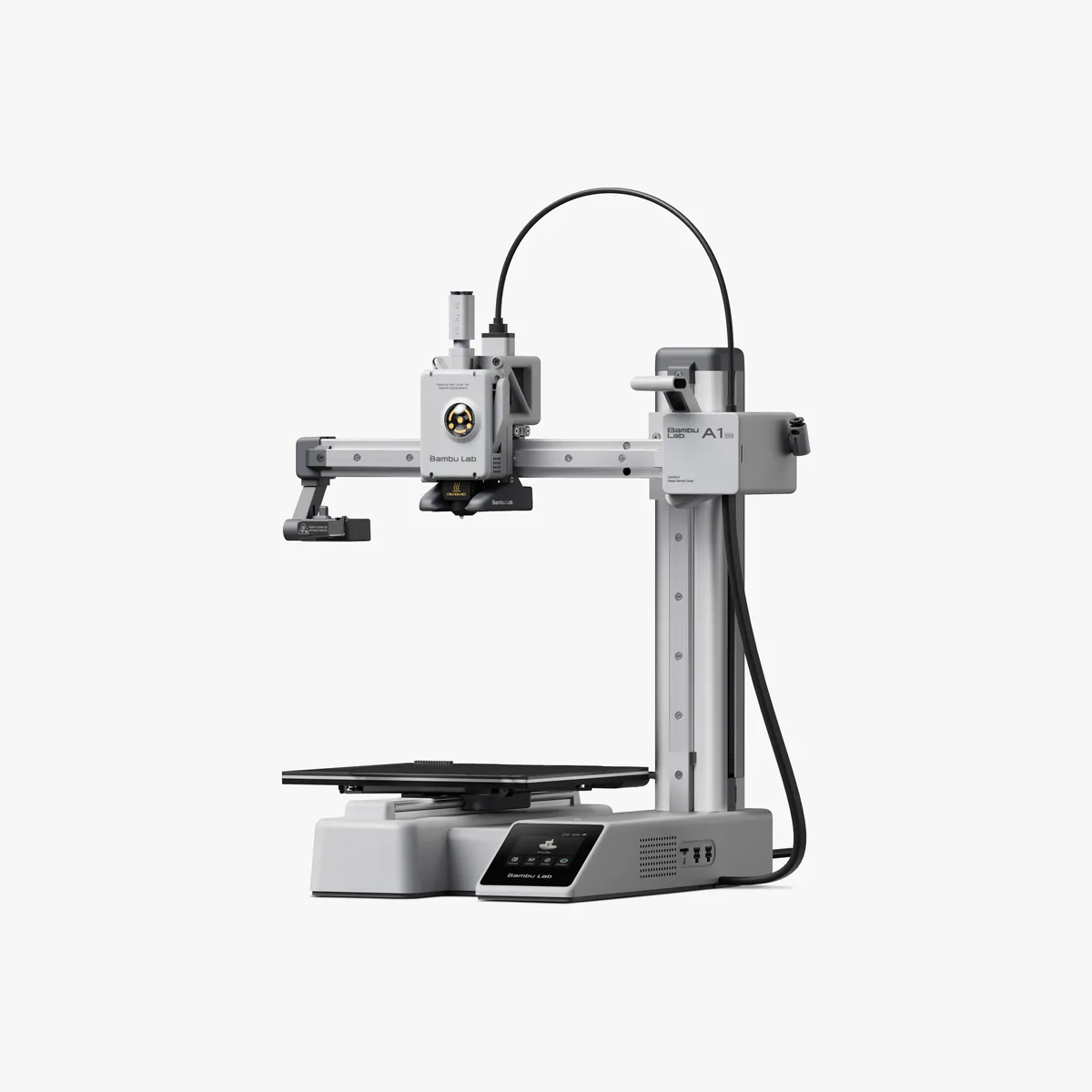
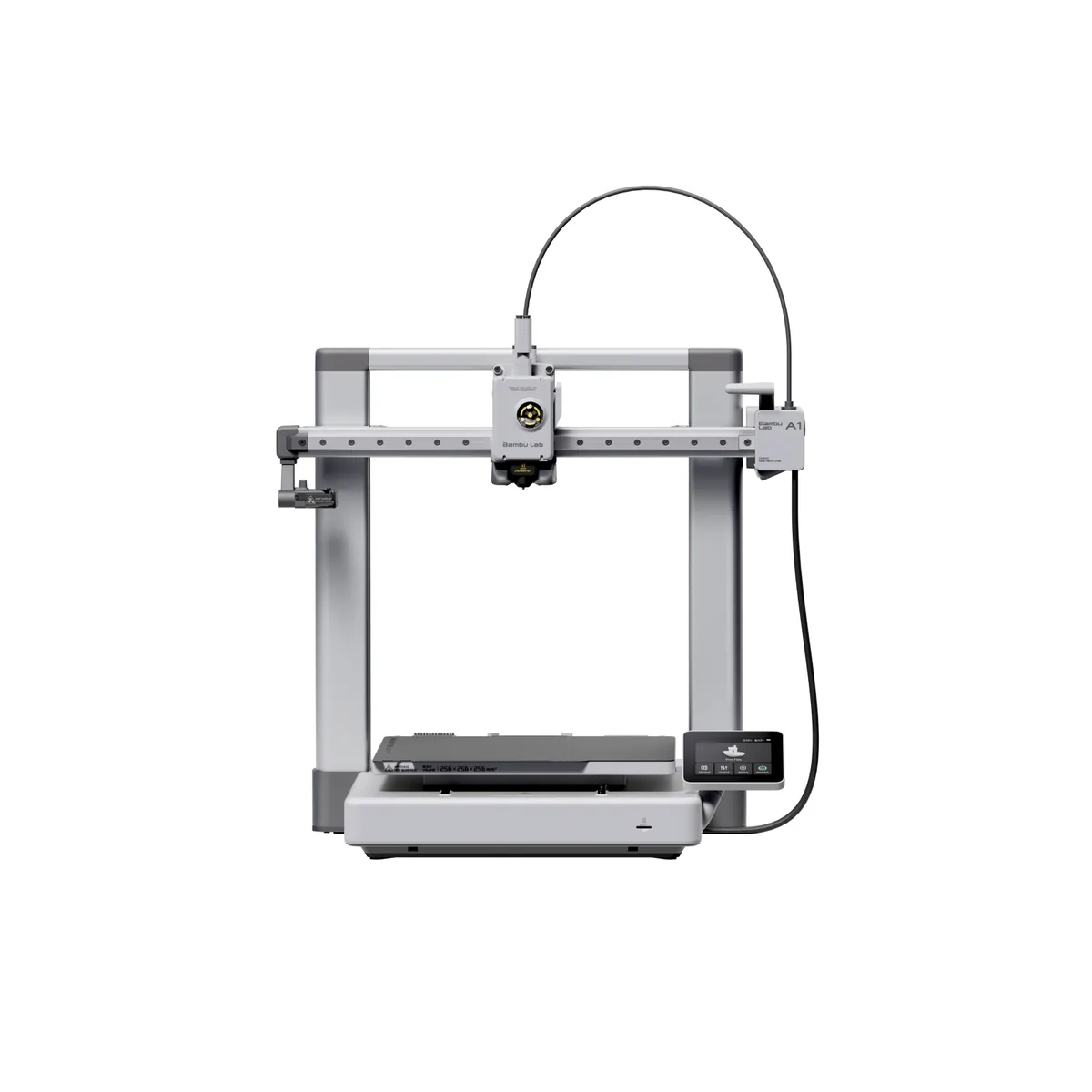
Take the A1 mini's ease of setup and give it a full 256 mm cube and a 100 °C bed, and you have the printer that quietly became the default recommendation for anyone who does not need an enclosure. The bed moves in Y, which caps how hard it can be driven on tall prints — physics that no firmware fixes — but within that limit it is fast, quiet and almost boringly reliable. The 100 °C bed opens up PETG properly and makes ABS technically possible, though without an enclosure the warping makes it a poor idea. Bambu had to recall the original heatbed cable in early 2024 over a short-circuit risk; units shipping since carry the revised cable, and the episode is worth knowing about if you are buying second-hand. Like the rest of the A range there is no published flow rate, so its 500 mm/s figure describes the gantry rather than how much plastic the hotend can actually melt.
- Approx. price
- ~$299
- Build volume
- 16.8 L
- Per litre
- $18
- True multi-material price
- ~$439
Real speed ceiling
Not published
Bambu Lab does not publish a volumetric flow rate for the A1, so its 500 mm/s claim cannot be checked against what the hotend can actually melt. We do not estimate one.
Best forSomeone who wants a big, quiet, no-fuss printer and prints mostly PLA and PETG.
Specifications
- Build volume
- 256 × 256 × 256 mm
- Volume
- 16.8 L
- Motion
- bedslinger
- Max speed
- 500 mm/s
- Acceleration
- 10,000 mm/s²
- Max flow
- Not published
- Hotend max temp
- 300 °C
- Bed max temp
- 100 °C
- Enclosure
- Open frame
- Extruder
- direct drive
- Auto level
- strain-gauge
Materials, control and build
- Multi-material
- AMS lite, 4 slots
- True multi-material price
- ~$439 (+~$140)
- Firmware
- Bambu
- Cloud
- Optional
- Camera
- Yes
- Assembly
- Pre-assembled
- Noise
- 48 dB
- Weight
- 8.6 kg
- Footprint
- 385 × 410 × 430 mm
Features
- 256 mm cube on a bed-slinger frame with linear rails on X and Y
- 100 °C heated bed covers PLA, PETG, TPU and PLA-CF
- Strain-gauge auto levelling and automatic Z offset
- AMS lite four-spool changer sold separately
- 1080p monitoring camera and LAN-only operation
What it does well
- 256 mm cube at a price that used to buy a 220 mm kit you assembled yourself
- Runs quietly enough for a home office and needs no tramming or Z-offset fiddling
- AMS lite adds four-colour printing without the printer having to change shape
- 100 °C bed handles PETG and PLA-CF properly rather than marginally
- Keeps working on a local network with no cloud account attached
Where it gives ground
- Moving bed limits real-world speed on tall parts no matter what the headline says
- Open frame means ABS, ASA and nylon warp — the 100 °C bed cannot compensate
- Early units were subject to a 2024 heatbed cable recall; check the revision on used machines
- Brass stock nozzle wears quickly on filled filaments
- No published volumetric flow, so throughput cannot be compared against machines that publish one
The points above are read off published specifications, not from owner reports.
What owners report
Drawn from owner discussions in 3D-printing communities, not from our own testing — this site has no test lab.
What owners like
- The most repeated owner sentiment is the jump in reliability over an Ender-class machine — repeated variations on having stopped levelling the bed and started printing
- Prints of a quality owners say they could not reach on their previous printer, without per-print tuning
- Phone-based control and monitoring gets mentioned constantly as a daily convenience rather than a spec-sheet feature
- The 256 mm bed hits the size most people report actually needing, where the mini's 180 mm does not
- Discounted often and deeply — owners report it dropping to around $339, which reframes the value comparison against everything else at that price
Common complaints
- The 2024 heatbed cable recall dominated owner discussion for months, and opinions split sharply between people who returned units immediately and people who judged the risk overstated
- Small plastic parts failing early comes up repeatedly — a broken cooling-fan tab within the first month is a specific recurring report
- Blob-of-death failures, where extrusion continues after the print detaches, appear in owner posts within the first weeks of ownership
- Being open-frame, the most common reason owners give for selling it is wanting an enclosed machine to contain fumes
- As a bed-slinger it is not the machine for large ABS or engineering parts, and owners who want those describe it as a stepping stone
The A1 is the printer that owner discussions most often credit with changing someone's mind about the hobby. The pattern is consistent enough to be a cliché in those communities: someone has been fighting a cheap kit printer, buys an A1, and reports that it simply works. The 256 mm bed is large enough that most people stop wishing for more, which is the main thing separating it from the mini.
Its history is not spotless. The January 2024 heatbed cable recall was the defining event of its first year, and it produced genuinely divided reactions — some owners returned units at once, others argued the risk was being overstated relative to other mains-powered appliances. Bambu shipped revised units with a reworked cable and strain relief. Separately, small-part durability comes up more than it should for a printer at this price, with cooling-fan tabs a specific repeat offender.
It suits someone printing PLA and PETG who wants the machine to be an appliance rather than a project. The consistent reason owners move on from it is not disappointment but materials: wanting an enclosure for ABS, ASA or for venting fumes out of a bedroom. If that is already on your list, it is worth considering an enclosed machine first.
Questions owners ask
+Was the A1 recall serious, and does it still matter?
Bambu recalled the heatbed cable in January 2024 over a short-circuit and scorching risk where the cable flexes, offering replacements or refunds. Units built afterwards ship with a revised cable and improved strain relief, so a new machine is unaffected. It is worth checking the revision on a second-hand unit. Owner opinion at the time was genuinely split on how severe the risk was in practice.
+A1 or A1 mini?
The A1's 256 mm bed against the mini's 180 mm is the whole decision, and owner discussions lean heavily toward the larger one unless desk space is the binding constraint. A recurring pattern is people buying the mini and adding a second printer within months. The A1 also has a 100 °C bed against the mini's 80 °C, which makes PETG easier.
+Can the A1 print ABS?
Technically the 100 °C bed allows it, but with an open frame the parts warp and delaminate, and the fumes go straight into the room. Owners who want ABS or ASA consistently describe buying an enclosed machine instead — selling the A1 to fund an enclosed printer is one of the more common stories in these discussions.
+Is the AMS lite worth adding?
Owners report valuing it for keeping spools loaded and dry as much as for multi-colour printing. The trade is purge waste: every colour change flushes the hot end, and on a long multi-colour print the purge can rival the model in weight. Several owners who cancelled it initially describe regretting that and buying it later.
+How loud is it?
Being open-frame it is among the quieter machines in this catalogue, and owners generally describe it as liveable in a room you work in — noticeably better than enclosed CoreXY machines, whose fans are the dominant noise source.