 FDM bedslinger~$269
Creality · released 2024
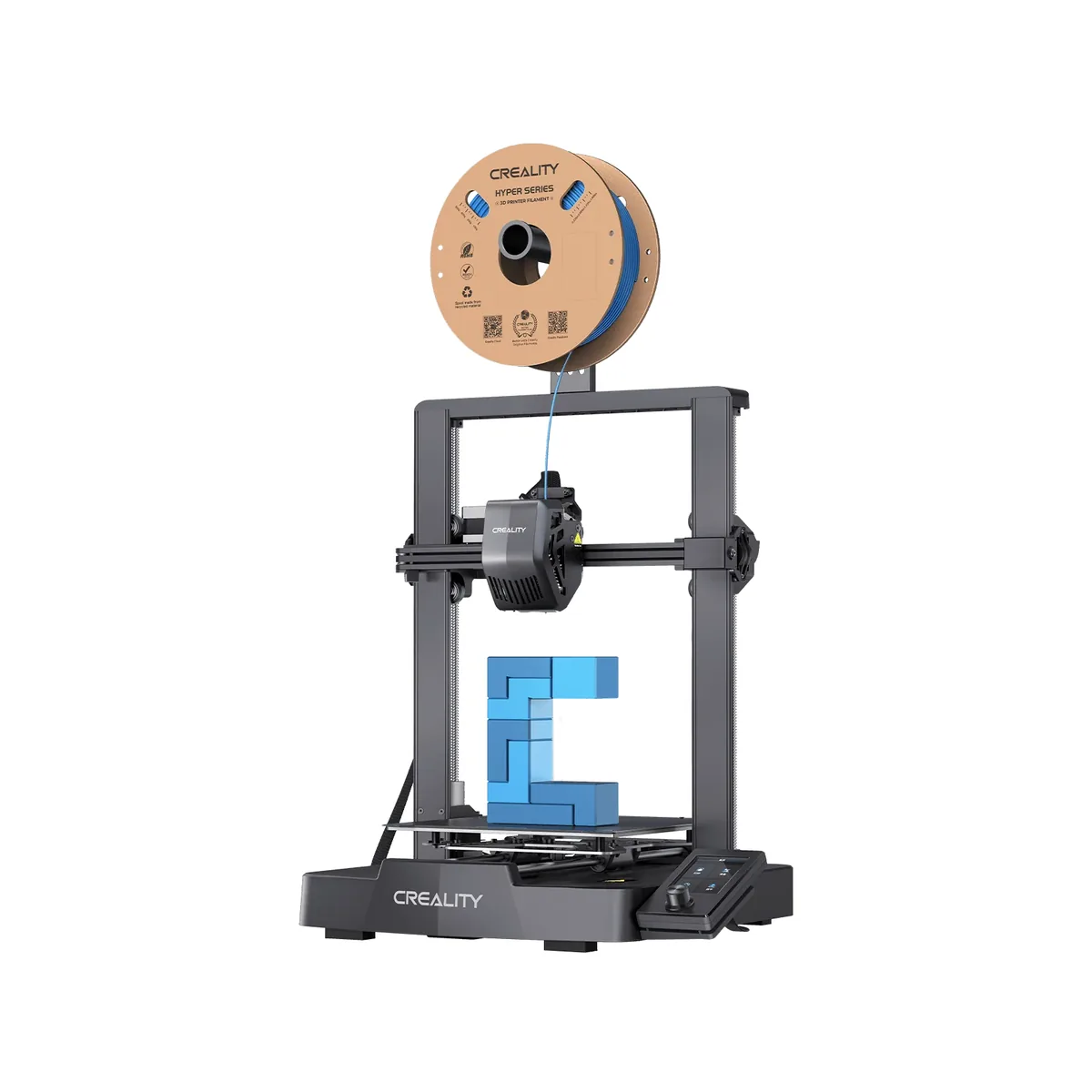
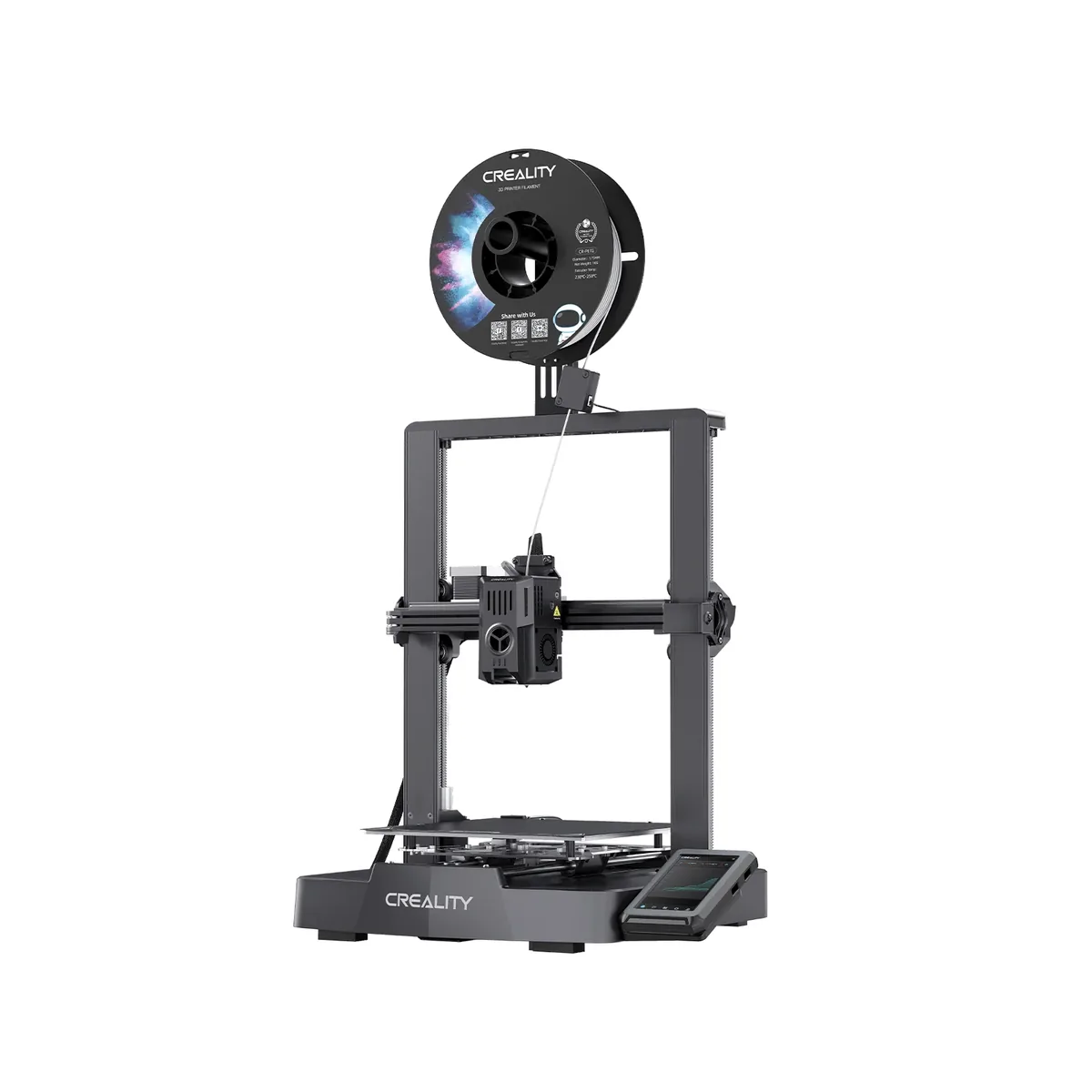
Creality Ender-3 V3 KE
Where the V3 SE is the old Ender made tolerable, the KE is the one that actually joined the modern era: Klipper firmware with input shaping, a 300 °C all-metal hotend, an X-axis linear rail and a 500 mm/s claim that input shaping makes partially real. The jump from 260 °C to 300 °C is the meaningful one — it puts PETG, PLA-CF and ASA-adjacent materials genuinely in reach rather than technically. Creality's Klipper build is locked down rather than open, which frustrates anyone hoping to drop in Mainsail or Fluidd, though root access has been a well-trodden community path for years. The bed is unchanged at 220 mm and there is still no enclosure, no camera and no multi-material option, so this is a fast single-colour workhorse rather than a platform. For $70 over the SE, the extra speed and hotend temperature are the easiest upgrade decision in the Creality range.
- Approx. price
- ~$269
- Build volume
- 11.6 L
- Per litre
- $23
- True multi-material price
- No changer offered
Real speed ceiling
Not published
Creality does not publish a volumetric flow rate for the Ender-3 V3 KE, so its 500 mm/s claim cannot be checked against what the hotend can actually melt. We do not estimate one.
Best forA budget printer that is genuinely fast and can handle more than PLA.
Specifications
- Build volume
- 220 × 220 × 240 mm
- Volume
- 11.6 L
- Motion
- bedslinger
- Max speed
- 500 mm/s
- Acceleration
- 8,000 mm/s²
- Max flow
- Not published
- Hotend max temp
- 300 °C
- Bed max temp
- 100 °C
- Enclosure
- Open frame
- Extruder
- direct drive
- Auto level
- strain-gauge
Materials, control and build
- Multi-material
- None offered
- Firmware
- Klipper
- Cloud
- Optional
- Camera
- No
- Assembly
- Partly assembled
- Weight
- 8.6 kg
- Footprint
- 433 × 366 × 490 mm
Features
- Klipper firmware with input shaping and pressure advance
- 300 °C all-metal hotend
- Linear rail on the X axis
- Strain-gauge automatic levelling with no manual Z offset
What it does well
- Input shaping makes the speed claim meaningful rather than theoretical, unlike the SE below it
- 300 °C all-metal hotend handles PETG, PLA-CF and nylon blends the SE cannot
- Klipper underneath, with a well-established community route to full root access
- Linear rail on X is a real mechanical upgrade at this price
- Only about $70 more than the V3 SE for a substantially better machine
Where it gives ground
- Creality's Klipper is locked down out of the box — Mainsail and Fluidd need unofficial steps
- No enclosure, so the 300 °C hotend cannot be used for ABS or ASA without warping
- No published flow rate, so the 500 mm/s figure cannot be checked at the nozzle
- 220 × 220 × 240 mm is small next to similarly priced current machines
- No camera, and no multi-material option of any kind
The points above are read off published specifications, not from owner reports.
What owners report
Drawn from owner discussions in 3D-printing communities, not from our own testing — this site has no test lab.
What owners like
- Owners run it hard — bulk-printing organiser bins for weeks at a time — and it holds up well enough that people ask about 24/7 production use
- The modding community around this frame is active, with owners printing their own upgrades and reporting real improvements
- Klipper with input shaping makes the speed claim meaningful, which genuinely separates it from the V3 SE below it
- Capable of real projects — owners post fixed-wing aircraft and other substantial functional prints made on it
- Cheap enough that running two is a plausible alternative to buying one better machine
Common complaints
- First-layer adhesion degrading after heavy continuous use is a specific reported pattern, surviving a thorough bed clean
- Hot-end replacement has caused new problems for owners, with the machine jerking back and forth afterwards
- Creality's stock slicer and locked-down Klipper are friction points owners work around rather than accept
- No enclosure and a 100 °C bed, so the 300 °C hotend cannot be used for what it implies
The V3 KE is where the Ender line stops being a compromise. Klipper with input shaping means the speed is usable rather than theoretical, and the 300 °C hotend opens up PETG and filled filaments the V3 SE cannot reach. What owner discussions show most clearly is that people work these hard: bulk-printing organiser bins for weeks, asking seriously about running 24/7 for a small business, and printing substantial functional projects like fixed-wing aircraft.
The problems reported are maintenance-shaped rather than fundamental. First-layer adhesion degrading after a fortnight of continuous printing appears specifically, and survives a proper bed clean — which points at the nozzle or the sheet rather than technique. Hot-end replacements have introduced new faults, with machines jerking back and forth afterwards, so that repair is worth doing carefully.
Its limits are the ones its price predicts: no enclosure, a 100 °C bed, and a hotend hotter than the rest of the machine can make use of.
Questions owners ask
+Can I run it continuously for a small business?
Owners do exactly that and ask about it openly. Printers do not need rest periods as such, but continuous running accelerates wear on the nozzle, the extruder gears and the build sheet, and first-layer problems after weeks of heavy use are a specific reported pattern. Plan for consumables rather than for downtime.
+Why did adhesion get worse after weeks of good printing?
Owners report exactly this after heavy continuous use, with a thorough soap-and-water bed clean not fixing it. The next things to check are nozzle wear — particularly if you have run any filled filament — and the build sheet's coating, which degrades with use and is a consumable rather than a permanent part.
+V3 KE or V3 SE?
The KE has Klipper with input shaping and a 300 °C hotend against the SE's 260 °C and no input shaping. For roughly $70 that is a substantially better machine, and it is the easier upgrade decision in Creality's range.
+Is the Klipper on it open?
Not out of the box — Creality ships a locked build with its own interface. Owners do get to full Klipper through well-trodden community routes, but it is an unofficial step rather than a documented feature. If open firmware is your priority, machines that ship it openly exist at a similar price.